Research Report: R245fa (HFC-245fa) – China’s 2026 Quota Release
BY Tao, Published Dec 11, 2025
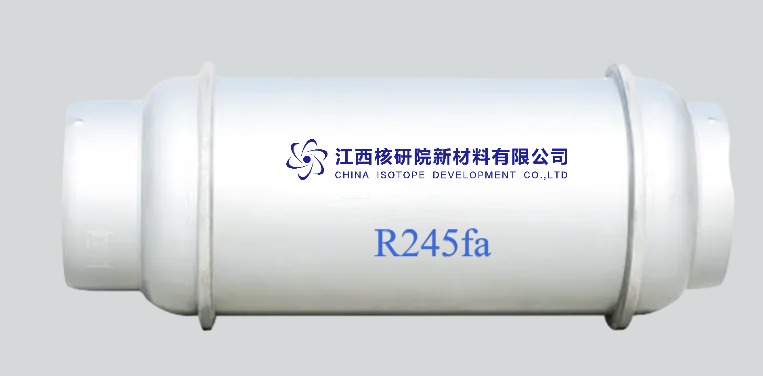
R245fa (1,1,1,3,3-pentafluoropropane), a third-generation hydrofluorocarbon (HFC), serves primarily as a blowing agent in rigid polyurethane (PU) foam insulation. It has gained prominence as a substitute for the phased-out second-generation refrigerant HCFC-141b. Recent policy developments in China, the world’s largest producer of fluorochemicals, have significantly influenced its market dynamics.
On December 9, 2025, China’s Ministry of Ecology and Environment (MEE) released the 2026 quota issuance list for controlled ozone-depleting substances (ODS) and HFCs. This list increased the R245fa production quota by approximately 3,000 tons to support the substitution of eliminated HCFC-141b, while maintaining a rigid supply ceiling for HFCs overall at around 797,800 tons. The policy also raised the inter-HFC quota conversion ratio from 10% to 30%, enhancing operational flexibility for producers.
Current applications center on energy-efficient insulation in appliances, buildings, and industrial systems. Demand is driven by the complete phase-out of HCFC-141b and growing needs for thermal insulation amid global energy efficiency mandates.
In the short term (2026–2029), supply-demand balance will tighten, supporting elevated prices as substitution accelerates. Medium to long term, the Kigali Amendment’s HFC phase-down schedule—freezing consumption at 2024 baseline levels and requiring a 10% reduction by 2029—will cap growth and eventually pressure R245fa demand as lower-GWP alternatives emerge.
1. Introduction
R245fa is a hydrofluorocarbon (HFC) with zero ozone depletion potential (ODP) but a global warming potential (GWP) of approximately 1030. Developed as a third-generation refrigerant and blowing agent, it emerged in the early 2000s as a replacement for HCFCs under the Montreal Protocol.
Its primary role is as a physical blowing agent in rigid PU foams, where it provides excellent thermal insulation properties due to its low thermal conductivity and non-flammability. Unlike earlier generations, R245fa is non-reactive with common PU processing materials and compatible with standard equipment.
China dominates global production and consumption of R245fa, accounting for the majority of capacity. Recent MEE quota announcements for 2026 underscore a transitional phase: accelerating HCFC elimination while managing HFC growth ahead of broader phase-down commitments.
2. Regulatory Background: China’s 2026 Quota System and Montreal Protocol Compliance
China’s refrigerant industry operates under strict quota controls to comply with the Montreal Protocol and its Kigali Amendment.
The December 2025 announcement sets 2026 HCFC production quotas at 151,400 tons (down 12,200 tons year-on-year) and eliminates HCFC-141b entirely—a key blowing agent in PU foams. This forces full transition to alternatives like R245fa.
For HFCs, total quotas rose marginally to approximately 797,800 tons, but supply remains capped, shifting the industry to stock-based competition. Key adjustments include:
- R245fa quota increase of ~3,000 tons, explicitly for HCFC-141b substitution.
- Minor increases for niche products (e.g., +50 tons for HFC-41 in semiconductors).
A significant rule change raises the allowable conversion ratio between different HFC quotas from 10% to 30%. This grants integrated producers greater flexibility to redirect capacity toward higher-margin products like R245fa.
Under the Kigali Amendment, China (an Article 5 Group 1 country) froze HFC production/consumption at baseline levels in 2024, with phased reductions: 10% by 2029, 30% by 2034, and 80% by 2045. These constraints will increasingly impact R245fa post-2029.
3. Current Application Scenarios
R245fa’s dominant use (>90%) is as a blowing agent in rigid PU foams, valued for its low vapor thermal conductivity (~0.010–0.012 W/m·K in foam cells), boiling point (15.3°C), and compatibility with polyols.
3.1 Appliance Insulation
R245fa-blown foams are widely used in refrigerators, freezers, and water heaters. They achieve superior energy efficiency (lambda values ~0.018–0.020 W/m·K), helping manufacturers meet stringent standards (e.g., China’s Grade 1 energy efficiency). Demand here is stable-to-growing due to rising appliance ownership in emerging markets and replacement cycles.
3.2 Building and Panel Insulation
Continuous and discontinuous panels for cold storage, commercial buildings, and residential walls employ R245fa foams. Its dimensional stability and low water absorption suit harsh environments. In China, building energy codes drive adoption in prefabricated panels and spray foam.
3.3 Industrial and Cryogenic Applications
R245fa excels in pipe insulation for LNG terminals, cryogenic storage, and district heating/cooling systems. Foams maintain performance at extreme temperatures (-160°C to +100°C) with minimal contraction.
3.4 Minor Uses
Limited refrigerant applications exist in centrifugal chillers (replacing R123) and as a component in blends. Semiconductor cleaning (rare) and aerosol propellants are negligible.
Overall, current demand concentrates in insulation, driven by energy efficiency regulations and HCFC-141b substitution.
4. Current Supply Situation
China produces nearly all global R245fa, with capacity estimated at 20–30 kt/year across major players. Quota concentration favors these incumbents, solidifying oligopolistic control.
Global production outside China is limited; former Western producers (e.g., Honeywell’s Enovate®) have shifted to lower-GWP options.
The 2026 quota increase (~3,000 tons) directly boosts supply for domestic substitution, but total HFC ceiling prevents unconstrained growth.
5. Demand Drivers and Current Market Dynamics
Demand for R245fa surges from HCFC-141b’s elimination. Previously, HCFC-141b dominated PU foaming in China; its zero quota creates an immediate ~10–15 kt gap, partially filled by R245fa.
Additional drivers:
- Energy efficiency mandates in appliances and buildings.
- Infrastructure growth (cold chain logistics, LNG).
- Export demand for insulated products.
Market reports estimate global R245fa consumption at ~20–25 kt annually, with China >80%. Prices have risen amid quota constraints and substitution.
6. Future Supply-Demand Outlook
6.1 Short-Term (2026–2029): Tight Balance and Price Support
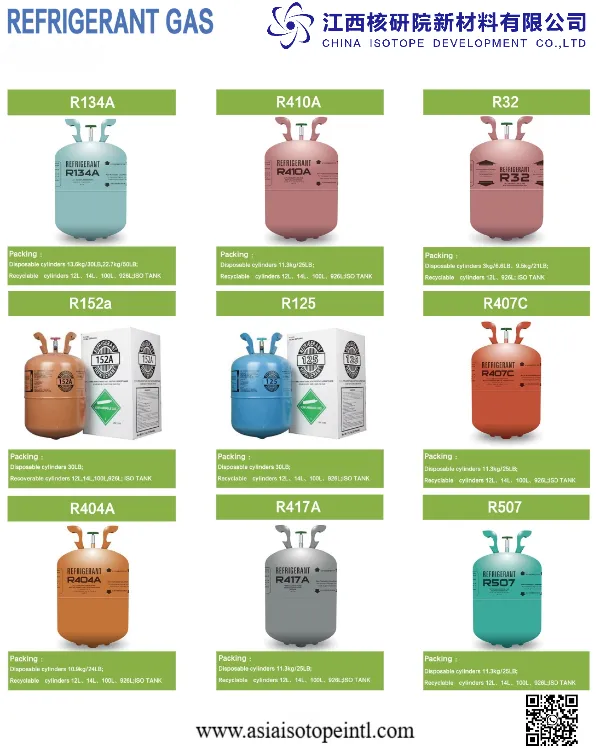
The 3,000-ton quota increase and 30% conversion flexibility will enable producers to meet substitution demand efficiently. Leading firms can reallocate from lower-margin HFCs (e.g., R32, R125) to R245fa.
Demand may rise 10–20% annually as full HCFC-141b transition completes. Supply will match via quotas, but scarcity premium persists due to frozen baselines.
Outlook: Bullish, with tight supply-demand and elevated profitability for quota holders.
6.2 Medium-Term (2030–2035): Peak and Initial Decline
Post-2029, Kigali-mandated reductions begin. China’s 10% cut (from ~900 Mt CO2-eq baseline) translates to meaningful R245fa constraints given its higher GWP.
Alternatives gain traction:
- HFOs (e.g., HFO-1233zd(E), GWP <1): Drop-in for many applications; increasing adoption in appliances.
- Hydrocarbons (cyclopentane): Cost-effective, zero GWP; dominant in some regions but flammability-limited.
- Water co-blown or CO2 systems: For lower-performance needs.
Demand peaks around 2030–2032, then declines 5–10% annually.
Supply: Quotas tighten; conversion flexibility helps initially but diminishes with overall cuts.
6.3 Long-Term (Post-2035): Accelerated Phase-Down
By 2045, 80% reduction forces near-elimination in uncontrolled uses. R245fa survives only in exempted/niché applications (e.g., military, aviation).
Global market projections: Moderate growth to ~USD 950 million by 2032, followed by contraction.
7. Risks and Opportunities
Opportunities:
- Quota holders capture substitution windfall.
- Export potential for insulated goods.
- Integrated producers leverage flexibility.
Risks:
- Faster-than-expected alternative adoption.
- Enforcement variability or quota reallocation.
- Geopolitical trade restrictions on fluorochemicals.
8. Conclusion
R245fa stands at a pivotal juncture. Current applications in PU foam insulation are robust, bolstered by regulatory-driven substitution for HCFC-141b. The 2026 quota increase and enhanced flexibility signal short-term supply relief and market strength.
However, the Kigali Amendment’s phase-down looms, capping long-term prospects as lower-GWP alternatives mature. Leading Chinese producers are well-positioned for the transitional boom, but strategic shifts toward next-generation blowing agents will be essential beyond 2030.
All market participants should monitor quota executions, alternative penetration rates, and energy efficiency policies for informed decision-making. R245fa’s era as a mainstream blowing agent appears set for a strong finale before gradual sunset.
China Isotope Development Co.,Ltd is profressional to supply R 245fa to clients over the past years to be qualified supplier of multinational companies, gaining their trust ranging from its quality / price / delivery. We know each parameters of product, to solve their questions on site , and pursuit to continue serving clients better.
Would you like a deeper dive into any refrigerants like R 134a, R152a, R32 , R 290 , R 245fa , R1234ze,R1234yf ….. etc ?
As an industry leader & reputable manufacturer focused in specialty gases, our goal is to support our customers by keeping them at the forefront of their industries. We’re here to help with any filtration questions you might have so you can transform your ideas into reality, and tackle those big science challenges.
Get free consultant, our experts are ready to serve.
(Follow up our update articles on www.asiaisotopeintl.com or send your comments to tao.hu@asiaisotope.com for further communications)