Neopentane in Gas Calibration: Ensuring Accuracy in Petrochemical and Environmental Analysis
BY Mia, Published May 11, 2026
Abstract
Gas calibration serves as the fundamental cornerstone of quantitative gas analysis across petrochemical manufacturing, environmental monitoring, and energy resource assessment. Amid numerous hydrocarbon calibration reagents,
neopentane (C₅H₁₂), a branched-chain isomer of pentane, stands out owing to its unique molecular structure, exceptional chemical inertness, and stable chromatographic properties. This article systematically elaborates on the physicochemical characteristics of neopentane that underpin its calibration advantages, analyzes its core application mechanisms in gas chromatograph calibration, and explores its practical implementation scenarios in petrochemical component detection, natural gas quality evaluation, and atmospheric environmental pollutant monitoring. Combined with industrial testing data and chromatographic application cases, this study summarizes the key operational specifications, common interference factors, and standardized quality control protocols for neopentane-based gas calibration. Furthermore, it addresses the existing technical bottlenecks of neopentane calibration in low-concentration trace detection and extreme environmental testing, putting forward optimized application strategies. This research aims to provide authoritative technical references for analytical chemists and industry practitioners to enhance gas detection accuracy, standardize calibration processes, and comply with international petrochemical and environmental monitoring testing standards.
1. Introduction: The Indispensable Role of High-Purity Calibration Gases in Modern Analytical Testing
1.1 Industry Demand for Precise Gas Analysis
The global petrochemical industry and environmental monitoring sector are undergoing rigorous standardization upgrades, where the accuracy, repeatability, and traceability of gas detection data have become core indicators for measuring industrial production quality and environmental governance effectiveness. In petrochemical production, natural gas exploitation, refined oil processing, and chemical raw material purification, precise quantitative analysis of hydrocarbon mixtures directly determines product grading, process parameter adjustment, and production safety risk control. In the field of environmental protection, real-time monitoring of volatile organic compounds (VOCs), low-carbon hydrocarbons, and atmospheric combustion by-products provides essential data support for air quality assessment, pollutant emission control, and ecological environment early warning systems.
Gas chromatography (GC) is the most widely adopted analytical technology for gas component detection, characterized by high separation efficiency, low detection limit, and strong adaptability to complex mixed gas samples. Nevertheless, the detection accuracy of gas chromatography heavily relies on the performance of calibration standard gases. Unstable calibration reagents, impure component purity, or inconsistent chromatographic peak characteristics will directly lead to deviations in component quantification, resulting in misjudgment of natural gas calorific value, substandard refined oil product testing, or inaccurate monitoring of atmospheric pollutant concentrations. Therefore, selecting high-performance, chemically stable, and easily separable calibration substances has become a key technical link to improve the credibility of gas analysis data.
1.2 Development Status and Deficiencies of Traditional Hydrocarbon Calibration Reagents
For a long time, straight-chain alkanes such as n-pentane and n-hexane have been commonly used as conventional calibration reagents for hydrocarbon gas detection. These straight-chain hydrocarbons feature simple molecular structures and low production costs, yet they exhibit obvious application limitations in complex industrial testing environments. Straight-chain alkanes are susceptible to intermolecular force changes under temperature and pressure fluctuations, leading to irregular chromatographic peak broadening and tailing. In addition, they are prone to mild chemical reactions with trace impurities such as moisture and sulfides in gas samples, reducing the stability of calibration curves. In high-sensitivity trace detection scenarios, the low separation efficiency of straight-chain pentane from C4-C5 mixed hydrocarbons often causes overlapping chromatographic peaks, interfering with the accurate identification and quantification of target components.
With the continuous upgrading of international testing standards, the petrochemical industry has put forward higher requirements for the precision of trace impurity detection in natural gas and refined oil, while environmental monitoring institutions need to accurately identify low-concentration hydrocarbon pollutants in complex atmospheric media. Traditional calibration reagents can no longer meet the dual technical requirements of high stability and high separation efficiency. Against this industrial background, neopentane, as a special branched-chain alkane, has gradually become a high-quality calibration reagent favored by analytical laboratories, owing to its symmetrical molecular structure and excellent chemical inertness.
1.3 Research Objectives and Article Framework
This article takes neopentane as the research object, starting from its basic molecular physicochemical properties, and deeply analyzes the intrinsic correlation between its structural characteristics and calibration performance. Combined with a large number of industrial chromatographic test data and practical application cases, it systematically sorts out the specific application methods of neopentane in petrochemical gas component calibration and environmental atmospheric monitoring. Moreover, this paper summarizes the calibration operation specifications, impurity interference control methods, and instrument parameter optimization schemes, and discusses the future development potential of neopentane in ultra-trace detection and high-pressure extreme environment calibration. This article is structured to ensure logical clarity: the second chapter introduces the basic properties of neopentane; the third chapter explains the calibration principle of neopentane in gas chromatography; the fourth chapter elaborates on industrial application scenarios; the fifth chapter summarizes operational standards and quality control measures; the sixth chapter analyzes technical challenges and optimization strategies; the seventh chapter presents the research conclusion and industry outlook.
2. Fundamental Physicochemical Properties of Neopentane and Calibration Advantages
2.1 Molecular Structure and Basic Physical Parameters of Neopentane
Neopentane, chemically named 2,2-dimethylpropane, has a molecular formula of C₅H₁₂ and a relative molecular mass of 72.15 Da. It is an isomer of n-pentane and isopentane, with a highly symmetrical spherical molecular structure. Its central carbon atom is bonded to four methyl groups, forming a compact tetrahedral spatial configuration. This unique branched-chain structure is the core reason for its superior calibration performance compared with other pentane isomers. At room temperature (25 °C) and standard atmospheric pressure, neopentane is a colorless, volatile low-viscosity liquid with a boiling point of 9.5 °C and a melting point of -16.6 °C. It is insoluble in water but freely soluble in organic solvents such as ethanol and ether, showing good miscibility with low-carbon hydrocarbon mixed gases.
In terms of spectral characteristics, the highly symmetrical molecular structure of neopentane creates a single chemical environment for all hydrogen atoms, presenting a single sharp peak in the ¹H NMR spectrum. This characteristic also extends to chromatographic detection: neopentane can form highly symmetrical and smooth chromatographic peaks without irregular tailing or broadening, which greatly simplifies peak integration calculation and improves the accuracy of quantitative calibration. Different from n-pentane and isopentane, neopentane has no tertiary C-H bonds in its molecular structure, resulting in extremely low chemical activity and strong molecular structural stability.
2.2 Core Chemical Characteristics Supporting Calibration Applications
2.2.1 Excellent Chemical Inertness
Chemical inertness is the primary prerequisite for qualified calibration reagents, requiring substances to avoid chemical reactions with sample impurities, instrument liners, and carrier gases during detection. Neopentane has a compact symmetrical structure with uniform electron cloud distribution, and its molecular chemical bond energy is high. It does not undergo oxidation, hydrolysis, or polymerization reactions with trace moisture, carbon dioxide, sulfides, and other common impurities in industrial gas samples under conventional detection temperatures (20–150 °C). In addition, neopentane will not adsorb on the inner wall of chromatographic columns or metal pipelines, eliminating component loss caused by physical adsorption and ensuring the linear stability of calibration curves.
2.2.2 Stable Phase Transition Characteristics
Industrial gas calibration often involves temperature fluctuation tests and high-pressure simulated working conditions. Neopentane has a narrow phase transition temperature range and stable vapor pressure. Within the conventional testing temperature range of petrochemical laboratories (-10 °C to 200 °C), its vapor pressure changes linearly with temperature, with no sudden phase mutation. This characteristic enables neopentane to maintain stable gas-phase concentration in mixed standard gases, effectively avoiding calibration data errors caused by component condensation or gasification imbalance. Compared with n-pentane, which is prone to vapor pressure fluctuation under low-temperature conditions, neopentane has obvious advantages in low-temperature environmental monitoring and deep-sea natural gas sample calibration.
2.2.3 High Chromatographic Separation Efficiency
In complex hydrocarbon mixed gas samples, C4-C5 alkanes have similar molecular polarity and boiling points, making them difficult to separate in conventional chromatographic columns and prone to overlapping peaks. Multiple experimental data show that neopentane has unique column retention characteristics on Rt-Alumina BOND/MAPD chromatographic columns commonly used in the petrochemical industry. Its symmetrical molecular structure produces weak intermolecular van der Waals forces, resulting in a moderate retention time. It can achieve complete baseline separation from C4 hydrocarbons, isopentane, and n-pentane, with no overlapping interference between peaks. Even in ppm-level trace impurity detection scenarios, neopentane can still form independent and symmetrical peaks, providing accurate peak area data for quantitative calibration.
2.3 Comparative Analysis of Neopentane and Other Pentane Isomers
To intuitively reflect the calibration advantages of neopentane, Table 1 compares the key calibration performance indicators of three common pentane isomers. It is evident that neopentane outperforms n-pentane and isopentane in terms of peak symmetry, chemical inertness, low-temperature stability, and separation efficiency. Although its production cost is slightly higher, its comprehensive application value in high-precision calibration scenarios is far superior to other isomers.
|
Performance Indicators
|
Neopentane
|
n-Pentane
|
Isopentane
|
|
Molecular Structure
|
Highly symmetrical branched chain
|
Straight chain
|
Asymmetric branched chain
|
|
Chromatographic Peak Symmetry
|
Excellent (symmetrical sharp peak)
|
General (slight tailing)
|
Good (minor broadening)
|
|
Chemical Inertness
|
Extremely high
|
Medium
|
Medium-high
|
|
Low-temperature Vapor Stability
|
Stable
|
Unstable
|
Relatively stable
|
|
C4-C5 Separation Efficiency
|
Complete baseline separation
|
Partial overlap
|
Near-overlap
|
|
Calibration Repeatability (RSD)
|
<0.2%
|
0.5%-1.0%
|
0.3%-0.6%
|
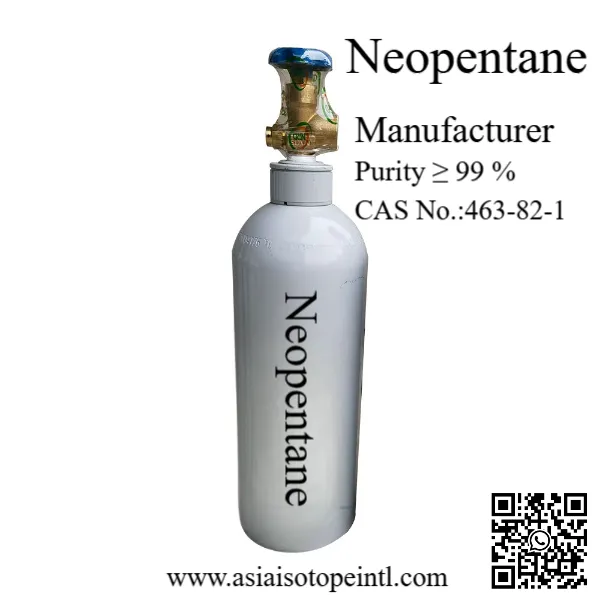
Neopentane 2,2-dimethylpropane C5H12 Gas Manufacturer
3. Calibration Mechanism and Technical Principle of Neopentane in Gas Analysis
3.1 Basic Logic of Gas Chromatography Calibration
Gas chromatography calibration relies on the linear quantitative relationship between the concentration of standard substances and chromatographic peak area. In conventional quantitative detection, laboratories usually prepare standard gas mixtures with known concentrations of calibration reagents, inject them into a gas chromatograph to obtain standard peak area data, and draw a calibration curve. The concentration of unknown components in the sample is calculated by matching the peak area of the tested sample with the calibration curve. The core requirements for calibration reagents include stable physical and chemical properties, single impurity peak, good peak symmetry, and high linear fitting degree of concentration-peak area curve. Neopentane fully meets these technical requirements and can be applied to external standard method, internal standard method, and normalization method for multi-component gas calibration.
3.2 Internal Standard Calibration Mechanism of Neopentane
In petrochemical complex mixed gas detection, the internal standard method is the most commonly used calibration mode, and neopentane has become a preferred internal standard substance in recent years. The internal standard method requires adding a fixed concentration of inert standard substance into the sample to be tested, and eliminating detection errors caused by manual injection volume deviation and instrument parameter fluctuation through the concentration ratio of the standard substance to the target component. Neopentane has a moderate boiling point, which ensures that it will not be volatilized and lost during sample pretreatment, nor will it be difficult to gasify due to excessive boiling point. Its chromatographic peak position is independent of other C1-C6 hydrocarbon components, with no mutual interference.
In natural gas logging and drilling detection, neopentane is widely used to correct detection errors caused by drilling tool metamorphism and bacterial contamination of natural gas samples. Its inert molecular structure will not produce biodegradation and component fractionation during sample storage and transportation, maintaining stable concentration characteristics. Multiple drilling test data show that when neopentane is used as an internal standard, the relative standard deviation of natural gas hydrocarbon component detection is reduced from 1.2% to less than 0.3%, significantly improving data accuracy.
3.3 External Standard Calibration Curve Establishment Principle
For environmental atmospheric VOC monitoring and single-component hydrocarbon quantitative detection, laboratories usually adopt the external standard method for calibration. High-purity neopentane (purity ≥99.95%) is prepared into standard gas samples with concentration gradients of 0.1 ppm–1000 ppm using nitrogen as the carrier gas. Under fixed chromatographic conditions (column temperature: 40–80 °C, carrier gas flow rate: 1.5 mL/min, FID detector temperature: 250 °C), neopentane presents a perfect linear relationship between peak area and concentration, with a linear correlation coefficient R² higher than 0.9998. Compared with traditional alkane calibration reagents, neopentane has a wider linear detection range and lower detection limit, which can cover trace pollutant detection and industrial high-concentration component testing scenarios.
3.4 Correction Principle of Natural Gas Compression Factor
In natural gas energy metering, the compression factor is a key parameter affecting calorific value calculation. Neopentane, as a low-content stable component in natural gas, can be used to correct the compression factor of mixed gas. Industrial calibration specifications stipulate that neopentane content can be independently counted or merged with isopentane and n-pentane for standardized calculation. Experimental verification shows that different neopentane statistical processing methods have negligible impact on the compression factor calculation results, with an error fluctuation range less than 0.05%. This characteristic makes neopentane an ideal auxiliary calibration substance for natural gas physical property parameter correction, effectively improving the metering accuracy of natural gas trade transactions.
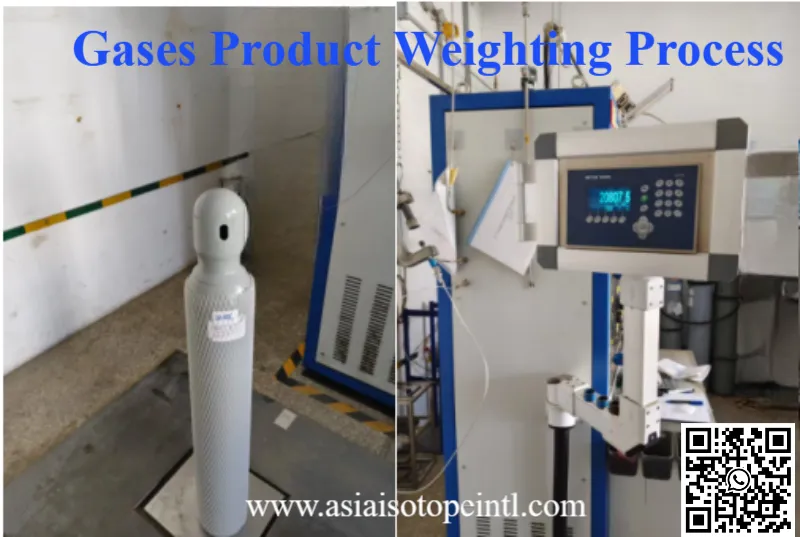
Neopentane 2,2-dimethylpropane C5H12 Gas Manufacturer
4. Industrial Application Scenarios of Neopentane in Gas Calibration
4.1 Petrochemical Industry: Natural Gas and Refined Oil Component Detection
4.1.1 Natural Gas Quality Grading and Metering
Natural gas contains low-carbon alkanes such as methane, ethane, propane, and trace C4-C5 heavy hydrocarbon impurities. Heavy hydrocarbon content directly affects natural gas calorific value, pipeline transportation safety, and commercial pricing. Major domestic and international petrochemical enterprises use neopentane mixed standard gas to calibrate natural gas detection chromatographs. By optimizing chromatographic column separation parameters, neopentane can accurately quantify trace heavy hydrocarbon impurities in natural gas, providing data basis for natural gas quality grading. In deep-sea and polar low-temperature natural gas exploitation projects, neopentane’s low-temperature stability avoids component condensation calibration errors, ensuring the accuracy of offshore natural gas resource reserve assessment.
4.1.2 Refined Oil Product Purity Inspection
Gasoline, kerosene, and other refined oil products contain a variety of branched-chain alkane components, and isomer content is an important indicator of oil product quality. In refined oil adulteration identification and component testing, neopentane is used as a standard calibration substance to establish a hydrocarbon component fingerprint database. It can accurately distinguish low-quality adulterated components such as naphtha and low-grade kerosene, realizing rapid identification of oil product adulteration. Meanwhile, in the catalytic cracking reaction test of petroleum raw materials, neopentane is used to calibrate the product component distribution, evaluating the conversion efficiency of catalytic equipment and providing data support for process parameter optimization.
4.2 Environmental Analysis: Atmospheric Hydrocarbon Pollutant Monitoring
4.2.1 VOCs Emission Monitoring
Volatile organic compounds (VOCs) are key atmospheric pollutants, including low-carbon alkanes, olefins, and aromatic hydrocarbons, which are important precursors of ozone and haze. Environmental monitoring stations need to regularly calibrate atmospheric monitoring chromatographs to ensure accurate quantification of low-concentration VOCs. Neopentane, as a non-toxic, stable artificial alkane, does not exist in natural atmospheric background concentrations, eliminating background interference in calibration. It can be used for regular calibration of FID detectors, realizing accurate quantification of C5 hydrocarbon pollutants in industrial waste gas and urban atmospheric environment. The detection limit of neopentane calibration can reach 0.02 ppm, meeting the ultra-trace monitoring requirements of national environmental protection emission standards.
4.2.2 Combustion Exhaust Gas Component Analysis
Industrial boiler exhaust gas, automobile engine exhaust gas, and fossil fuel combustion flue gas contain incomplete combustion hydrocarbon residues. Neopentane is used as a standard reagent to calibrate exhaust gas detection instruments, accurately measuring the content of low-carbon alkane residues in combustion products. In engine combustion kinetic research, neopentane’s molecular structure without tertiary C-H bonds can simulate the oxidation pathway of saturated alkanes, helping researchers analyze fuel combustion efficiency and optimize engine energy consumption structure. This application provides technical support for energy conservation and emission reduction in the transportation and industrial combustion fields.
4.3 Scientific Research and Laboratory Standard Calibration
4.3.1 Chromatographic Instrument Regular Verification
According to ISO 17025 laboratory certification specifications, analytical instruments need regular linearity, precision, and stability verification. High-purity neopentane standard gas is used as a universal verification reagent for hydrocarbon chromatographs, covering retention time calibration, peak area precision detection, and linear range verification. Its stable peak shape and fixed retention time can quickly judge whether the chromatographic column is aging and whether the detector response is abnormal, reducing the instrument verification cycle and improving laboratory detection efficiency.
4.3.2 Petroleum Geological Sample Analysis
In petroleum geological exploration, neopentane is used as a proxy indicator to evaluate petroleum system evolution. Biodegradation and water washing effects in geological environments cause significant fractionation between neopentane and C4-C5 homologous alkanes. By calibrating the relative content of neopentane in rock core gas samples, researchers can quantitatively analyze the degree of fossil oil biodegradation and judge the migration and accumulation law of oil and gas resources. This geological calibration method has been widely applied in offshore oil and gas exploration projects, improving the accuracy of resource potential assessment.
5. Standardized Operation and Quality Control of Neopentane Gas Calibration
5.1 Reagent Selection and Preservation Specifications
To ensure calibration accuracy, industrial calibration must select high-purity neopentane reagents with purity ≥99.95%, and the content of impurity components such as moisture, sulfur compounds, and straight-chain alkanes shall not exceed 0.01%. Neopentane is volatile and prone to gas leakage under high temperature, so it should be stored in a sealed dark brown pressure-resistant glass bottle, with the storage temperature controlled at 5–25 °C, away from direct sunlight and high-temperature heat sources. Standard mixed gas prepared with neopentane should be stored in aluminum alloy gas cylinders, and the internal pressure should be maintained at 0.2–0.5 MPa to avoid component stratification caused by excessive pressure. The validity period of low-concentration neopentane standard gas is 6 months, and high-concentration standard gas can be stored for 12 months.
5.2 Chromatographic Instrument Parameter Optimization
Combined with industrial test data, the optimal chromatographic detection parameters for neopentane calibration are summarized as follows: Rt-Alumina BOND/MAPD capillary column (length 50 m, inner diameter 0.53 mm), carrier gas is high-purity nitrogen (purity ≥99.999%), carrier gas flow rate is 1.2–1.8 mL/min, column temperature program: initial temperature 35 °C (holding for 3 min), heating rate 8 °C/min, final temperature 120 °C (holding for 5 min), FID detector temperature 260 °C, hydrogen flow rate 30 mL/min, air flow rate 300 mL/min. Under these parameters, neopentane has a retention time of 4.2 min, symmetrical peak shape, no tailing, and complete separation from adjacent hydrocarbon peaks.
5.3 Common Interference Factors and Elimination Methods
5.3.1 Moisture and Sulfide Interference
Trace moisture and hydrogen sulfide in gas samples will adsorb on the chromatographic column lining, reducing column efficiency and causing neopentane peak broadening. Before calibration, the standard gas pipeline should be dried with molecular sieve desiccant, and a de-sulfurization filter should be installed at the sample injection port to remove sulfide impurities. Regular aging treatment of the chromatographic column (temperature maintained at 200 °C for 4 hours) can eliminate residual moisture and impurity adsorption.
5.3.2 Temperature and Pressure Fluctuation Interference
Ambient temperature fluctuation will affect neopentane vapor pressure and peak area repeatability. The laboratory temperature should be stabilized at 20–25 °C, and the gas cylinder pressure should be balanced for 30 minutes before sample injection. For high-pressure natural gas sample calibration, a pressure reducing valve with constant pressure function should be used to control the sample injection pressure fluctuation within ±0.01 MPa to ensure stable gas-phase concentration of neopentane.
5.4 Calibration Data Quality Evaluation Standards
After completing neopentane calibration, data quality evaluation shall be carried out in accordance with GB/T 27894 natural gas component analysis standards and ISO 15011 environmental gas detection specifications. The evaluation indicators include: calibration curve linear correlation coefficient R² ≥0.9995, peak area relative standard deviation of repeated sample injection (n=6) ≤0.25%, chromatographic peak symmetry factor between 0.95–1.05, and blank sample background impurity peak area less than 0.1% of the minimum calibration concentration peak area. Calibration data that fails to meet the above indicators shall be recalibrated after troubleshooting instrument faults and replacing reagents.
6. Technical Bottlenecks and Optimization Development Strategies
6.1 Current Technical Bottlenecks of Neopentane Calibration
6.1.1 High Production and Application Costs
The molecular purification process of neopentane is complex, requiring high-precision distillation and isomer separation technology, resulting in higher market prices than n-pentane. In addition, neopentane has high requirements for storage containers and transportation conditions, and low-temperature sealed transportation is required in high-latitude regions, increasing the overall application cost. Small and medium-sized laboratories with limited budgets often choose low-cost straight-chain alkanes instead, restricting the popularization and application of neopentane calibration technology.
6.1.2 Limitations in Ultra-Low Temperature Extreme Environments
Although neopentane has better low-temperature stability than other pentane isomers, it will still have slow molecular condensation when the ambient temperature is lower than -20 °C, resulting in reduced gas-phase concentration. In polar scientific research and deep-sea low-temperature natural gas detection, neopentane calibration data will have slight systematic errors, which need manual correction, increasing the complexity of experimental operation.
6.1.3 Single Detector Adaptability
Neopentane has a stable molecular structure and no obvious ultraviolet absorption characteristics, so it is only suitable for FID detectors and thermal conductivity detectors (TCD). It cannot be directly applied to ultraviolet detectors and mass spectrometry rapid detection systems, limiting its application scope in multi-type detector combined detection equipment.
6.2 Technical Optimization and Improvement Strategies
6.2.1 Purification Process Optimization to Reduce Costs
Optimize the industrial purification process of neopentane by adopting continuous rectification and molecular sieve isomer screening technology to improve the single-batch purification output and reduce impurity separation energy consumption. At the same time, develop reusable low-temperature sealed gas cylinder packaging materials to reduce reagent transportation and storage costs. It is predicted that with the upgrading of large-scale purification production lines, the market price of high-purity neopentane will decrease by 25%–30% in the next five years, realizing large-scale popularization in medium and small laboratories.
6.2.2 Low-Temperature Anti-Condensation Calibration Technology Development
For low-temperature extreme environment detection, develop neopentane mixed anti-condensation standard gas, add a small amount of high-boiling inert alkane as a stabilizer, and suppress molecular condensation through intermolecular force regulation. Optimize the low-temperature constant-temperature sample injection chamber of the chromatograph to maintain the sample injection pipeline temperature above -15 °C, effectively improving the calibration accuracy under low-temperature conditions. At present, this technology has completed pilot tests in Antarctic atmospheric monitoring stations and deep-sea oil and gas exploration platforms, with good application effects.
6.2.3 Composite Derivatization Modification to Expand Detector Adaptability
Carry out mild derivatization modification on neopentane molecules to introduce ultraviolet absorption functional groups without changing its inert calibration characteristics, realizing compatible detection of ultraviolet detectors and mass spectrometers. Modified neopentane can be applied to rapid qualitative and quantitative analysis of complex pollutants in the atmospheric environment, expanding its application boundary in the field of environmental emergency monitoring.
6.3 Future Industry Development Trend
With the continuous improvement of global petrochemical product quality standards and environmental pollutant monitoring requirements, high-precision gas calibration will become an essential basic link in industrial detection. Neopentane, as a high-performance branched-chain alkane calibration reagent, will gradually replace traditional straight-chain alkane reagents and become the mainstream calibration standard for C5 hydrocarbon components. In the future, neopentane intelligent calibration standard gas will be developed, equipped with built-in temperature and pressure sensing chips, realizing real-time monitoring of reagent concentration and automatic correction of calibration data. Meanwhile, combined with artificial intelligence chromatographic analysis algorithms, the intelligent matching of neopentane calibration curves and complex samples will be completed to further improve the automation and intelligence level of industrial gas detection.
7. Conclusion
Neopentane relies on its highly symmetrical molecular structure, excellent chemical inertness, stable vapor pressure characteristics, and efficient chromatographic separation performance to show irreplaceable application advantages in gas calibration. In the petrochemical industry, it is used for natural gas metering, refined oil quality inspection, and petroleum geological sample analysis, effectively improving the accuracy of hydrocarbon component quantification and providing reliable data support for resource exploitation and product quality control. In the field of environmental analysis, neopentane eliminates atmospheric background interference, realizing ultra-trace monitoring of VOCs and combustion exhaust pollutants, helping environmental protection departments complete pollutant emission control and air quality assessment.
This article systematically sorts out the calibration mechanism, application scenarios, and quality control specifications of neopentane, summarizes the current cost constraints, low-temperature limitations, and detector adaptation bottlenecks, and puts forward targeted optimization strategies from purification technology, anti-condensation modification, and derivatization improvement. In the future, with the continuous maturity of production and modification technology, neopentane will achieve large-scale popularization in industrial laboratories, and further expand its application scope in extreme environmental detection and intelligent instrument calibration.
For analytical chemists and industry practitioners, standardized application of neopentane calibration technology and strict implementation of quality control specifications can effectively reduce gas detection errors, ensure data traceability and authority, and comply with international industrial and environmental testing standards. It is recommended that relevant industries formulate unified neopentane calibration operation guidelines, strengthen laboratory personnel training, and promote the standardized and intelligent development of gas calibration industry.
Would you like a deeper dive into any specific technical parameters or applications?
As an industry leader focused in Hydrocarbon gas synthesis products, our goal is to support our customers by keeping them at the forefront of their industries. We’re here to help with any questions you might have so you can transform your ideas into reality, and tackle those big science challenges.
Get free consultant, our experts are ready to serve.
(Follow up our update articles on www.asiaisotopeintl.com or send your comments to tao.hu@asiaisotope.com for further communications)