Neopentane as a High-Purity Standard Gas for Chromatography and Industrial Monitoring
BY Mia, Published May 11, 2026
1. Introduction
In modern analytical chemistry and industrial process monitoring, high-purity standard gases serve as the foundational benchmark for instrument calibration, qualitative and quantitative analysis, and data traceability. Among numerous hydrocarbon standard substances, neopentane (chemical formula: C₅H₁₂, IUPAC name: 2,2-dimethylpropane) stands out as a uniquely valuable reference material. Characterized by its highly symmetrical molecular structure, stable physical and chemical properties, and distinguishable chromatographic behavior, neopentane has gradually become an indispensable high-purity standard gas in gas chromatography (GC), petrochemical detection, environmental monitoring, and industrial quality control fields.
As a branched-chain isomer of pentane, neopentane differs significantly from n-pentane and isopentane in molecular configuration. Its tetrahedral symmetric molecular structure minimizes intermolecular van der Waals forces, endowing it with low boiling point, high volatility, and exceptional chemical inertness. These intrinsic physical and chemical advantages make high-purity neopentane free from common interference issues such as peak tailing, component decomposition, and unstable retention time that plague many hydrocarbon standard gases. For chromatographic laboratories and industrial monitoring departments pursuing high-precision detection data, neopentane provides reliable and repeatable analytical conditions.
In recent years, with the upgrading of industrial detection standards and the strict implementation of environmental emission regulations, the market demand for high-purity neopentane standard gas has continued to grow. Unlike conventional standard gases such as methane and ethane, neopentane exhibits unique separation characteristics in complex hydrocarbon mixtures, especially suitable for trace impurity detection in C4 hydrocarbon streams and isomer separation analysis. This article systematically elaborates on the basic properties, purification technology, chromatographic application advantages, industrial monitoring scenarios, detection specifications, and industry application limitations of high-purity neopentane. It also summarizes the development trends of neopentane standard gas, aiming to provide professional references for analytical researchers, industrial detection engineers, and relevant institution practitioners.
2. Fundamental Physicochemical Properties of Neopentane
2.1 Basic Physical Parameters
Neopentane is a colorless, transparent, and volatile aliphatic alkane at room temperature and pressure, with no peculiar odor. According to the standard data released by the National Institute of Standards and Technology (NIST), its molecular weight is 72.1488 g/mol, boiling point is 9.5 °C, melting point is -16.6 °C, and density is 0.613 g/cm³ (at 20 °C). Compared with n-pentane (boiling point 36.1 °C) and isopentane (boiling point 27.8 °C), neopentane has the lowest boiling point among the three pentane isomers, which is attributed to its highly symmetrical spherical molecular structure. This structure weakens intermolecular gravitational forces and reduces the energy required for molecular vaporization.
Another notable physical feature of neopentane is its single hydrogen chemical environment. In the ¹H NMR spectrum, neopentane presents only a single sharp peak (δ = 0.902 in CCl₄), which confirms its highly uniform molecular structure. This structural simplicity ensures that neopentane does not produce miscellaneous peaks during chromatographic detection, effectively avoiding spectral interference and improving the accuracy of qualitative analysis. In addition, neopentane is slightly soluble in water and easily soluble in non-polar organic solvents such as ether and petroleum ether, showing good solvent compatibility in sample pretreatment.
2.2 Chemical Stability and Safety Characteristics
Neopentane has excellent chemical inertness under normal temperature and pressure conditions. Its molecular structure contains only stable carbon-carbon single bonds and carbon-hydrogen bonds, with no unsaturated functional groups. It is not prone to oxidation, decomposition, or polymerization reactions, and does not chemically react with common metal containers, chromatographic column fillers, and carrier gases. This chemical stability enables high-purity neopentane to maintain stable component concentration during long-term storage and detection, avoiding standard failure caused by chemical deterioration.
From the perspective of industrial application safety, neopentane belongs to low-toxicity chemical substances. Its acute oral toxicity is extremely low, and it will not cause severe damage to the human body under conventional contact conditions. However, neopentane is flammable, with a flammable limit of 1.4% to 7.5% (volume fraction) in air. Therefore, sealed storage and ventilation operation environments are required during production, transportation, and use. Meanwhile, neopentane does not contain ozone-depleting substances, with zero ozone depletion potential (ODP), which conforms to modern green industrial production standards and environmental protection regulations.
3. Purification Technology and Purity Grading of High-Purity Neopentane
3.1 Industrial Raw Material Sources
Industrial crude neopentane is mainly derived from by-products of petrochemical cracking processes, especially in the fractionation process of C4 and C5 hydrocarbon mixtures. In the production of 1,3-butadiene, n-butane, and butylene, neopentane often exists as a trace impurity in hydrocarbon streams. In addition, crude neopentane can also be obtained through the methylation reaction of tert-butyl compounds, such as the methylation synthesis of tert-butyl iodide with dimethylzinc. The raw material neopentane extracted from industrial by-products contains impurities including n-pentane, isopentane, butane homologs, and trace water, which cannot directly meet the standard gas requirements for chromatography.
3.2 Core Purification Processes
To prepare high-purity neopentane suitable for chromatographic analysis and industrial monitoring, multiple refined purification processes are required to remove trace impurities. The mainstream industrial purification technology combines physical separation and chemical purification methods, with the core processes including rectification separation, adsorption purification, and drying dewatering.
First, precision rectification is adopted to separate neopentane from other pentane isomers and hydrocarbon impurities. Based on the significant boiling point difference between neopentane and impurity components, a high-efficiency packed rectification tower is used to control temperature and pressure parameters to realize directional separation. Second, molecular sieve adsorption technology is applied to remove trace water and polar impurities in crude neopentane. The porous structure of molecular sieves can efficiently adsorb water molecules without reacting with neopentane, ensuring ultra-low water content of finished products. Finally, high-purity nitrogen is used for purging and degassing to eliminate dissolved air and volatile light impurities, further improving the purity of neopentane.
3.3 Purity Grading and Quality Inspection Standards
According to the requirements of analytical detection and industrial monitoring, high-purity neopentane is divided into three grades: analytical grade (≥99.5%), chromatographic grade (≥99.9%), and ultra-high purity grade (≥99.99%). Chromatographic grade and ultra-high purity grade neopentane are the mainstream standard gases used in professional detection scenarios. The impurity control indicators include moisture content (≤10 ppm), total hydrocarbon impurities (≤50 ppm), and non-volatile residues (≤1 ppm).
Finished neopentane standard gas needs to pass strict quality inspection before delivery. Common detection methods include gas chromatography for impurity component analysis, Karl Fischer moisture meter for water content detection, and mass spectrometry for molecular purity verification. All inspection indicators comply with ISO 6353 chemical reagent standards and ASTM D2163 hydrocarbon detection specifications, ensuring the traceability and consistency of standard gas quality.
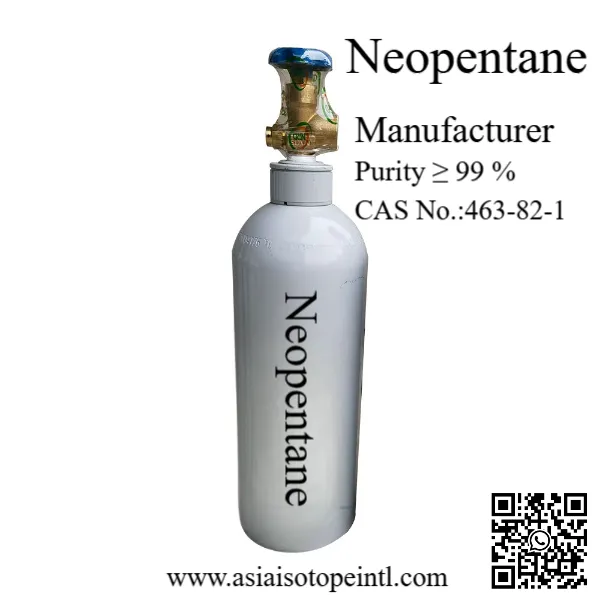
Neopentane 2,2-dimethylpropane C5H12 Gas Manufacturer
4. Advantages of High-Purity Neopentane as a Chromatographic Standard Gas
4.1 Excellent Chromatographic Peak Characteristics
In gas chromatographic detection, the peak shape of standard substances directly affects the accuracy of qualitative and quantitative analysis. Benefiting from its symmetrical molecular structure and low intermolecular force, neopentane presents a symmetrical, sharp, and smooth single peak in both packed columns and capillary columns, without peak tailing, peak bifurcation, or hump interference. Compared with n-pentane which is prone to peak broadening, neopentane has higher peak resolution and simpler peak identification logic, making it very suitable for chromatographic system debugging and peak position calibration.
Moreover, neopentane has moderate retention time in conventional chromatographic columns. It will not flow out too fast to overlap with air peaks, nor stay in the column for too long to cause peak delay. This characteristic enables it to serve as an ideal intermediate retention time reference standard for the separation and identification of C3-C6 hydrocarbon mixtures.
4.2 Stable Calibration Performance for Instrument Verification
Chromatographic instruments require regular performance verification to ensure detection accuracy, including retention time calibration, linearity verification, and detector sensitivity testing. High-purity neopentane has stable physical and chemical properties, and its peak area and retention time remain highly consistent under fixed chromatographic conditions. It can be used for long-term repeated calibration of gas chromatographs to evaluate the stability of carrier gas flow rate, column temperature uniformity, and detector response.
For common detectors such as flame ionization detector (FID) and thermal conductivity detector (TCD), neopentane has a stable response signal. Its linear correlation coefficient in concentration gradient calibration can reach more than 0.9999, which meets the high-precision quantitative calibration requirements of laboratories. In addition, neopentane will not cause irreversible adsorption or contamination to chromatographic columns, and will not damage stationary phase materials, reducing the maintenance cost of chromatographic instruments.
4.3 Unique Advantages in Isomer Separation Detection
The separation and detection of alkane isomers has always been a difficult point in chromatographic analysis, especially for C4 and C5 hydrocarbon isomers with similar structures. Neopentane, as a special branched isomer, has a significantly different molecular polarity and spatial structure from n-pentane and isopentane. It can achieve complete baseline separation from other isomers in a low-polarity capillary column, solving the problem of difficult identification of overlapping peaks of pentane isomers.
In the detection of C4 hydrocarbon streams, neopentane is often used as an internal standard substance to assist in the quantitative analysis of trace impurities such as butane and butylene. Restek’s professional chromatographic research shows that neopentane can maintain stable separation efficiency in high-purity C4 hydrocarbon samples, effectively distinguishing trace isomer impurities that are difficult to identify by conventional standard gases.
5. Industrial Monitoring Application Scenarios of High-Purity Neopentane
5.1 Petrochemical Production Quality Control
The petrochemical industry is the largest application field of high-purity neopentane standard gas. In the fractionation, cracking, and refining processes of petroleum hydrocarbons, it is necessary to continuously monitor the component content of hydrocarbon streams to ensure product purity and production safety. Neopentane is a common trace impurity in light hydrocarbon products such as liquefied petroleum gas (LPG) and industrial butane. Using high-purity neopentane as the standard gas can realize ppm-level accurate quantitative detection of impurities in raw materials and finished products.
In addition, in the production process of polymer materials such as polyurethane foam and polystyrene foam, neopentane is used as a foaming agent. Industrial production lines need to regularly detect the concentration of neopentane in raw material formulations and residual substances to control product thermal insulation performance and material stability. The standard gas calibration method based on high-purity neopentane provides reliable data support for foam material production quality control.
5.2 Environmental Air Pollution Monitoring
Volatile organic compounds (VOCs) are key monitoring indicators of atmospheric environmental pollution, and alkanes are important components of industrial VOCs. Neopentane, as a volatile low-carbon alkane, is often discharged into the atmosphere along with petrochemical exhaust gas and industrial solvent volatilization. Environmental monitoring departments use high-purity neopentane standard gas to calibrate atmospheric VOCs detection instruments, realizing accurate quantification of neopentane pollutants in ambient air and industrial exhaust gas.
Compared with other alkane standard gases, neopentane has low background interference in the atmospheric environment, and its chromatographic peak is easy to identify, which can effectively avoid the data deviation caused by overlapping peaks of mixed pollutants. It is widely used in atmospheric environment monitoring stations, petrochemical plant exhaust detection, and urban VOCs pollution source tracing analysis.
5.3 Pharmaceutical and Fine Chemical Residual Detection
In the pharmaceutical and fine chemical industries, residual solvent detection is an essential link in product quality inspection. Alkanes are common residual organic solvents in drug synthesis and reagent production. High-purity neopentane is used as a reference standard for residual solvent gas detection, especially suitable for the detection of non-polar solvent residues in biological preparations and high-purity chemical reagents.
Combined with headspace gas chromatography (HS-GC) technology, neopentane standard gas can complete the quantitative analysis of trace residual solvents in solid and liquid samples. Its low toxicity and stable detection signal make it more suitable for pharmaceutical safety detection than toxic aromatic standard substances, conforming to the requirements of pharmaceutical production quality management specifications.
5.4 Thermodynamic and Calorimetric Measurement
Due to its simple molecular structure and stable thermodynamic properties, neopentane is also used as a standard reference material for thermodynamic and calorimetric measurement in industrial laboratories. It has accurate and fixed thermodynamic parameters such as vapor pressure, enthalpy of vaporization, and specific heat capacity. High-purity neopentane can calibrate calorimeters and physical property testing instruments, providing basic data support for the research of material phase transition and molecular kinetic diffusion.
Neopentane 2,2-dimethylpropane C5H12 Gas Manufacturer
6. Usage Specifications and Storage Requirements of Neopentane Standard Gas
6.1 Standard Gas Configuration and Detection Conditions
In practical chromatographic detection, high-purity neopentane is usually prepared into constant-concentration standard gas mixtures with high-purity nitrogen or helium as the diluent. The common concentration range is 10 ppm to 1000 ppm, which covers the concentration requirements of trace impurity detection and conventional quantitative analysis. For high-precision trace detection, the standard gas needs to be configured in a constant-temperature airtight container to avoid concentration deviation caused by volatilization and condensation.
The optimal chromatographic detection conditions for neopentane are summarized as follows: carrier gas is high-purity nitrogen (purity ≥99.999%), capillary column is low-polarity methyl silicone column, column temperature is programmed to rise from 30 °C to 150 °C, detector is FID, and injection port temperature is 120 °C. Under these conditions, neopentane can achieve complete separation with adjacent hydrocarbon components, and the peak shape is stable without interference.
6.2 Sealed Storage and Transportation Specifications
Although neopentane has good chemical stability, its high volatility puts forward strict requirements for storage and transportation. High-purity neopentane standard gas is usually stored in polished stainless steel pressure-resistant cylinders, with internal anti-corrosion treatment to prevent trace metal impurities from polluting the standard gas. The storage environment needs to maintain low temperature (5-25 °C), dryness, and ventilation, avoiding direct sunlight and high-temperature heat sources to prevent cylinder pressure from exceeding the safe range.
In terms of transportation, neopentane is classified as Class 3 flammable dangerous goods, and it is necessary to comply with international dangerous goods transportation specifications. During transportation, collision and extrusion of cylinders should be avoided, and fire prevention and static elimination measures should be taken. After opening the standard gas cylinder, it should be used up within the validity period to prevent component changes caused by long-term contact with air.
6.3 Daily Maintenance of Detection Instruments
When using neopentane standard gas for instrument calibration, it is necessary to regularly replace the carrier gas filter and drying tube to reduce the interference of water and impurities in the gas circuit on detection results. The injection port liner needs to be cleaned regularly to avoid sample residue accumulation. After each calibration test, high-purity nitrogen should be used to purge the chromatographic column and gas circuit to ensure no residual neopentane remains, which can extend the service life of the instrument and maintain detection stability.
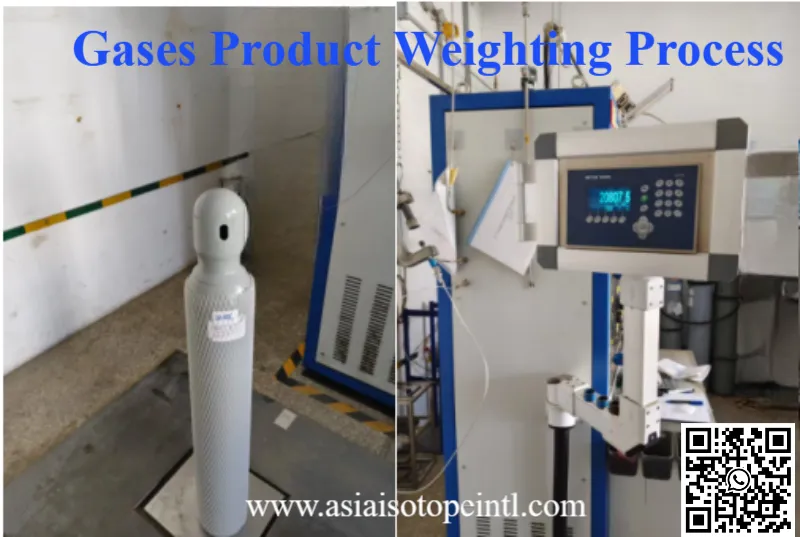
Neopentane 2,2-dimethylpropane C5H12 Gas Manufacturer
7. Industry Limitations and Optimization Solutions of Neopentane Standard Gas
7.1 Existing Application Limitations
Despite its numerous application advantages, high-purity neopentane still has some limitations in industrial promotion. First, the production cost is relatively high. The purification process of neopentane is complex, and the yield of ultra-high purity products is low, resulting in a higher market price than n-pentane and isopentane. Second, neopentane has a low boiling point and is highly volatile, which puts forward higher requirements for the airtightness and temperature control of detection equipment, increasing the use cost of small laboratories. Third, neopentane has poor solubility in high-polarity solvents, limiting its application in high-polarity chromatographic separation systems.
7.2 Targeted Optimization Solutions
Aiming at the cost problem of neopentane, petrochemical enterprises optimize the separation and purification process of by-products to improve the comprehensive utilization rate of raw materials and reduce the production cost of high-purity neopentane through large-scale production. For the volatility problem, manufacturers adopt low-temperature constant-temperature gas distribution technology and high-pressure sealed cylinder packaging to enhance the stability of standard gas transportation and use. In view of the poor polarity adaptability, laboratory researchers use mixed solvent modification technology to improve the compatibility of neopentane in high-polarity detection systems, expanding its application scope.
8. Industry Development Trend and Future Prospect
8.1 Continuous Upgrading of Purification Technology
With the progress of fine chemical separation technology, the purification process of neopentane is developing towards high efficiency, low energy consumption, and intelligence. The emerging membrane separation technology and supercritical extraction technology will replace part of the traditional rectification process, effectively reducing energy consumption and impurity content in the purification process. It is expected that in the next three years, the production cost of ultra-high purity neopentane (≥99.99%) will decrease by 15%-20%, and the product purity stability will be further improved.
8.2 Expanded Application Scenarios in Emerging Industries
In addition to traditional petrochemical and environmental monitoring fields, high-purity neopentane will be gradually applied in emerging industries such as new energy materials and semiconductor manufacturing. In the semiconductor industry, ultra-high purity neopentane can be used as a cleaning standard gas for electronic-grade hydrocarbons to detect trace organic impurities in semiconductor raw materials. In the field of new energy batteries, it is applied to the detection of volatile organic components in battery electrolyte solvents, providing data support for battery safety performance evaluation.
8.3 Improvement of Industry Detection Specifications
At present, international standard organizations are gradually revising the detection specifications of hydrocarbon standard gases, and neopentane is included in the recommended reference standard list for isomer separation and trace impurity detection. In the future, the industry will form a unified neopentane standard gas production, detection, and use specification system, further standardizing the product quality and application process, and promoting the standardized development of the high-purity standard gas industry.
9. Conclusion
As a high-value hydrocarbon standard gas, high-purity neopentane has irreplaceable application advantages in chromatography and industrial monitoring by virtue of its symmetrical molecular structure, stable physicochemical properties, excellent chromatographic peak characteristics, and unique isomer separation performance. It not only realizes high-precision instrument calibration and qualitative and quantitative analysis in petrochemical production, environmental monitoring, and pharmaceutical detection, but also provides reliable reference materials for thermodynamic measurement and material scientific research.
Although neopentane still has limitations such as high production cost and strict storage conditions, with the continuous optimization of purification technology, the expansion of industrial application scenarios, and the improvement of industry specifications, its comprehensive application value will be further released. In the future, high-purity neopentane will become one of the core standard gases in the field of high-precision analytical detection, providing accurate and stable data support for industrial production upgrading, environmental pollution control, and scientific research innovation.
For chromatographic laboratories and industrial monitoring enterprises, rationally selecting high-purity neopentane standard gas and standardizing its use and storage process can effectively improve detection accuracy and data repeatability, reduce instrument maintenance costs, and create higher economic and technical benefits for industrial production and scientific research.
Would you like a deeper dive into any specific technical parameters or applications?
As an industry leader focused in Hyrdocabon gas products, our goal is to support our customers by keeping them at the forefront of their industries. We’re here to help with any questions you might have so you can transform your ideas into reality, and tackle those big science challenges.
Get free consultant, our experts are ready to serve.
(Follow up our update articles on www.asiaisotopeintl.com or send your comments to tao.hu@asiaisotope.com for further communications)