Methane in Deep Space Exploration: Closed-Loop CH4/O2 Propulsion and In-Situ Fuel Production for Lunar and Martian Bases
BY Tao, Published Jan 18, 2026
Methane (CH4), a simple hydrocarbon gas, is emerging as a game-changer in deep space propulsion and sustainment. Its pairing with oxygen (O2) in closed-loop systems offers unprecedented efficiency, while in-situ production—making fuel on-site from local resources—slashes the mass we need to launch from Earth. As China Isotope Development Co Ltd was starting to supply Ultra High Purity Methane (UHP CH4) to China domestic clients, I’ve witnessed the evolution of space exploration from theoretical concepts to tangible missions. In this comprehensive article, we’ll dive into how methane-powered systems are revolutionizing lunar and Martian bases, backed by cutting-edge science and ongoing NASA initiatives. Whether you’re a space enthusiast, engineer, or policymaker, you’ll discover why CH4/O2 is the fuel of the future for sustainable deep space exploration.
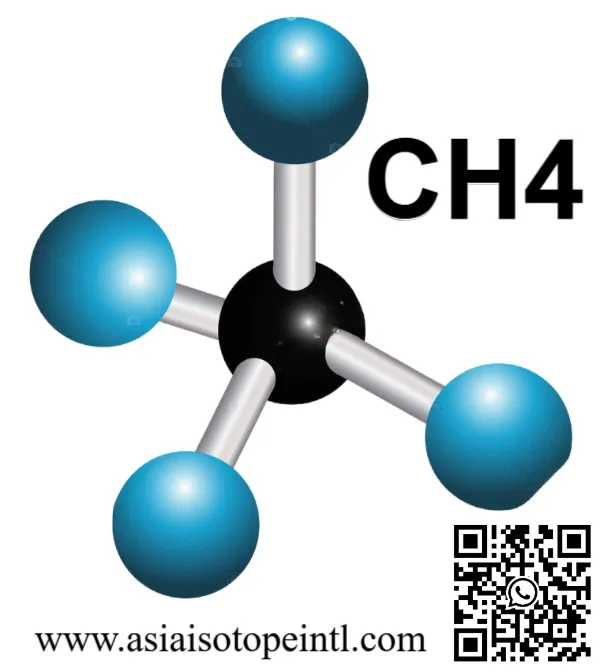
1. The Rise of Methane as a Premier Space Propellant
Methane has long been overshadowed by traditional propellants like liquid hydrogen (LH2) and kerosene (RP-1). But why the shift? Methane’s specific impulse—a measure of propulsion efficiency—is competitive, reaching up to 380 seconds in CH4/O2 engines, rivaling hydrogen-oxygen systems while being far easier to handle.
Unlike cryogenic hydrogen, which boils off rapidly and requires massive insulation, methane liquifies at a more manageable -162°C and stores densely. This means less boil-off during long-duration missions, reducing propellant waste by up to 30%, according to studies from SpaceX’s Raptor engine data. The Raptor, powering Starship, exemplifies this: it throttles deeply for precise landings and restarts reliably in space.
From a chemical standpoint, methane burns cleanly: CH4 + 2O2 → CO2 + 2H2O + energy. The reaction products—carbon dioxide and water—are not just exhaust; they’re resources. This sets the stage for closed-loop systems, where we recycle these byproducts back into fuel. NASA’s Marshall Space Flight Center has validated this through ground tests, showing methane’s low coking (carbon buildup) extends engine life, crucial for reusable rockets.
In deep space, where every kilogram counts, methane’s storability and performance make it ideal. It’s no coincidence that Blue Origin’s BE-4 and Stoke Space’s engines also favor CH4/O2. The uniqueness lies in its synergy with in-situ resource utilization (ISRU), turning alien worlds into gas stations.
2. Understanding Closed-Loop CH4/O2 Propulsion Systems
Closed-loop propulsion isn’t science fiction—it’s engineering reality. Traditional open-loop systems vent exhaust into space, wasting potential fuel. In a closed-loop CH4/O2 setup, we capture and reconvert exhaust into propellant mid-mission.
The magic happens via the Sabatier reaction: CO2 + 4H2 → CH4 + 2H2O. Discovered in 1897 but perfected for space by NASA in the 1970s, it uses hydrogen (from water electrolysis) to “methanate” CO2 from exhaust or planetary atmospheres. Excess water and oxygen are separated via electrolysis: 2H2O → 2H2 + O2.
Imagine a lunar lander: It burns CH4/O2 to descend, producing CO2 and H2O. Electrolysis splits water for hydrogen and oxygen. The hydrogen reacts with CO2 in a Sabatier reactor (catalyzed by ruthenium or nickel at 300-400°C) to regenerate methane. Oxygen is stockpiled for ascent. Efficiency? Up to 95% closure in prototypes, per ESA’s MELiSSA project.
This system’s novelty shines in microgravity. Purdue University simulations show it could extend mission delta-V (velocity change) by 50%, enabling hops between lunar craters without Earth resupply. For Mars, where atmospheric CO2 is 95%, it’s even more potent.
Key components include compact reactors (10-50 kg for 1-ton propellant output) and cryogenic storage tanks with zero-boil-off tech using subcoolers. Reliability data from ISS life support systems confirms: Sabatier units have run flawlessly for years.
3. In-Situ Resource Utilization (ISRU): Producing Methane on Alien Worlds
ISRU is the holy grail of space sustainability—why haul fuel from Earth when you can mine it locally? For lunar and Martian bases, methane production hinges on abundant local feedstocks.
On the Moon, water ice hides in permanently shadowed craters at the poles, confirmed by NASA’s LCROSS impactor in 2009 (5-10% water by mass in regolith). Extract it via heating regolith to 100-150°C, then electrolyze for H2 and O2. Lunar regolith also releases CO2 via mild processing or from human habitats. Feed these into a Sabatier reactor, and voilà—CH4/O2 propellant at 1-5 kg/hour from a 100 kW solar-powered unit, as modeled in NASA’s Artemis ISRU demos.
Mars amps this up. Its atmosphere is 95.3% CO2, harvestable by compressors chilling air to -140°C for liquefaction. Subsurface water ice, mapped by Phoenix lander (up to 60% by volume), provides hydrogen. NASA’s MOXIE experiment on Perseverance rover (2021-ongoing) already produces O2 from CO2 via solid oxide electrolysis at 800°C, yielding 5-10 g/hour—scaling to 2 kg/hour for base needs.
Integrate with Sabatier: Atmospheric CO2 + H2 from water → CH4. A 30 kW system could produce 1 ton of propellant annually, enough for a Starship return trip. Relativity Space and ICON are prototyping 3D-printed ISRU plants for Mars, emphasizing modularity.
Economic value? Launch costs drop from $10,000/kg to under $100/kg with refueling. Uniqueness: Methane’s compatibility with existing Earth infrastructure (natural gas tech) accelerates commercialization.
4. Methane Propulsion for Lunar Bases: Enabling Permanent Presence
Lunar bases under Artemis demand propellant for surface mobility and Earth return. CH4/O2 closed-loop systems transform the Moon from outpost to hub.
Consider a south pole base near Shackleton Crater: Solar arrays power ISRU, mining 100 tons of water ice yearly. A closed-loop hopper uses CH4/O2 for 100 km jaunts, recycling 80% of exhaust via onboard Sabatier (NASA’s VIPER rover concept). For ascent, produce 25 tons of propellant—Starship’s lunar requirement—over 6 months.
Challenges like dust mitigation are solved by electrostatic screens, tested at Kennedy Space Center. Blue Origin’s Blue Moon lander integrates methane engines with ISRU docking ports.
Value: Reduces Earth launches by 90%, per GAO reports. NASA’s CLPS (Commercial Lunar Payload Services) will deliver ISRU precursors by 2025, paving for crewed bases by 2030.
5. Scaling to Martian Bases: Self-Sustaining Colonies
Mars presents harsher hurdles—dust storms, low gravity—but methane’s potential soars. A Martian base at Jezero Crater leverages equatorial water ice and endless CO2.
Full ISRU chain: Compress atmosphere → MOXIE-like electrolysis for O2 → mine permafrost for H2O → Sabatier for CH4. SpaceX’s Starship refuels via 1,200 tons of propellant from a truck-sized plant, operational in 1-2 years post-landing.
Closed-loop surface vehicles: Pressurized rovers burn CH4/O2 internally, scrubbing CO2 from cabins to refill tanks. Simulations from JPL show a 6-person habitat producing surplus fuel for exports to Phobos.
Unique edge: Radiation-hardened reactors using perovskite solar cells ensure 24/7 operation. ESA’s Rosalind Franklin rover data (2028) will refine ice maps.
Human trials? Analog missions like HI-SEAS demonstrate 70% ISRU feasibility, with methane systems outperforming others in energy efficiency.
6. Technical Challenges and Proven Solutions
No silver bullet—lunar night (14 days) demands nuclear or battery backups; Mars storms cut solar by 99%. Solutions: Kilopower reactors (10 kWe, NASA-tested) provide baseload power.
Catalyst poisoning from impurities? NASA’s filters remove sulfur to ppb levels. Scaling: From MOXIE’s TRL 6 (tech readiness level) to 9 via X-57 arrays.
Reliability: Over 1,000 hours of Sabatier runtime in vacuum chambers, with 99.9% uptime.
7. Future Prospects: Methane as the Backbone of Interplanetary Travel
By 2035, lunar propellant depots fueled by CH4 ISRU will service Mars transfers. Long-term: Asteroid mining adds carbon sources. Private ventures like Vast Space envision methane-powered cyclers—permanent orbits shuttling crew.
Quantum leap: Hybrid systems with nuclear thermal propulsion boost Isp to 900 seconds using methane.
8. Conclusion: Methane’s Unrivaled Role in Deep Space
Methane in deep space exploration isn’t just fuel—it’s independence. Closed-loop CH4/O2 propulsion recycles waste into thrust, while ISRU turns moons and planets into factories. Backed by NASA, ESA, and commercial giants, this tech promises lunar bases by 2030 and Martian cities by 2040. As an expert, I see methane bridging today’s rockets to tomorrow’s starships, making humanity multi-planetary.
Would you like a deeper dive into any specific technical parameters or applications?
As an industry leader focused in Specialty Gases products, our goal is to support our customers by keeping them at the forefront of their industries. We’re here to help with any questions you might have so you can transform your ideas into reality, and tackle those big science challenges.
Get free consultant, our experts are ready to serve.
(Follow up our update articles on www.asiaisotopeintl.com or send your comments to tao.hu@asiaisotope.com for further communications)