Zero-Defect Manufacturing: Ultra High Purity Nitrogen as the Ultimate Guardian Against Molecular Contamination
BY Tao, Published Jan 2, 2026
The Invisible Battle for Perfection
In the relentless pursuit of manufacturing excellence, we face an enemy that cannot be seen with the naked eye yet possesses the power to destroy billion-dollar production runs. Molecular contamination—measured in parts per billion or even parts per trillion—represents one of the most formidable challenges in modern high-tech manufacturing. As someone who has spent decades studying and implementing specialty gas solutions across industries, I can attest that ultra high purity (UHP) nitrogen has emerged as our most reliable sentinel against this invisible threat.
The semiconductor industry loses approximately $100 billion annually to defects, with molecular contamination accounting for a significant portion of these losses. In pharmaceutical manufacturing, a single contamination event can compromise entire batches worth millions of dollars and, more critically, endanger patient lives. These stark realities underscore why zero-defect manufacturing has transitioned from an aspirational goal to an operational imperative.
Understanding Molecular Contamination: The Silent Destroyer
The Nature of the Beast
Molecular contamination occurs when unwanted molecules—whether organic compounds, moisture, oxygen, or other reactive species—interact with product surfaces during manufacturing. These contaminants operate at scales that challenge our intuition. To put this in perspective, a single fingerprint contains enough organic contamination to render thousands of semiconductor wafers unusable. Even the ambient air we breathe contains moisture levels that would catastrophically damage sensitive manufacturing processes.
The insidious nature of molecular contamination lies in its ability to cause defects that may not manifest immediately. In semiconductor fabrication, oxygen contamination at levels as low as 1 part per billion can alter the electrical properties of silicon wafers, creating latent defects that only appear after devices are deployed in the field. Similarly, in pharmaceutical lyophilization processes, trace moisture can compromise drug stability, potentially reducing shelf life from years to months.
Sources and Pathways
Contamination sources are surprisingly diverse and often counterintuitive. While obvious sources like human operators and ambient air receive significant attention, less apparent culprits include outgassing from supposedly “clean” materials, permeation through polymer seals, and even the manufacturing equipment itself. I’ve witnessed cases where state-of-the-art cleanrooms maintained exceptional particle control yet failed to address molecular contamination from plasticizers leaching out of newly installed piping systems.
The pathways for contamination are equally varied. Adsorption and desorption cycles create a dynamic exchange of contaminants between surfaces and the surrounding atmosphere. Temperature fluctuations can drive previously trapped molecules out of materials, while pressure changes can enhance permeation rates through barriers. Understanding these mechanisms is crucial for implementing effective protection strategies.
Ultra High Purity Nitrogen: The Gold Standard of Inert Protection
Defining Ultra High Purity
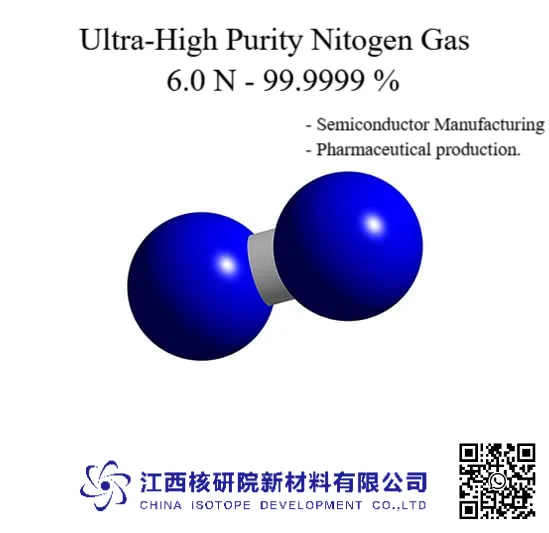
When we speak of ultra high purity nitrogen in the context of zero-defect manufacturing, we’re referring to nitrogen with a minimum purity of 99.9999% (6N) or higher, with some applications demanding 99.99999% (7N) purity. This means total impurities must not exceed 1 part per million for 6N grade, with individual contaminants often specified at parts per billion levels.
The specification requirements extend beyond simple purity percentages. Critical parameters include:
- Moisture content: Typically less than 0.5 parts per million (ppm), with advanced applications requiring less than 10 parts per billion (ppb)
- Oxygen levels: Generally below 0.5 ppm, with some processes demanding less than 100 ppb
- Total hydrocarbons: Often specified below 0.1 ppm as methane equivalent
- Particulate matter: Zero particles larger than 0.1 micrometers per cubic foot
These specifications might seem extreme, but they reflect the realities of modern manufacturing tolerances. In extreme ultraviolet (EUV) lithography, for instance, even a single hydrocarbon molecule can absorb enough energy to create a carbon deposit that ruins the optical system.
Production and Purification Technologies
Achieving these exceptional purity levels requires sophisticated production and purification technologies. The journey begins with standard industrial nitrogen production through cryogenic air separation or pressure swing adsorption, yielding nitrogen at 99.5-99.999% purity. This serves as the feedstock for advanced purification processes.
The transformation to ultra high purity involves multiple stages:
Catalytic Purification: Precious metal catalysts remove oxygen and hydrogen through controlled reactions. Modern catalytic systems can reduce oxygen levels from several ppm to below 1 ppb in a single pass. The key lies in maintaining optimal temperature and flow conditions while preventing catalyst poisoning from trace contaminants.
Adsorptive Purification: Specialized molecular sieves and activated carbons selectively remove moisture, carbon dioxide, and hydrocarbons. The latest generation of adsorbents features tailored pore structures that trap specific contaminants while allowing nitrogen to pass through unimpeded. Regeneration cycles must be carefully controlled to prevent desorbed contaminants from re-entering the product stream.
Membrane Separation: While less common for achieving the highest purity levels, advanced hollow fiber membranes can provide continuous removal of certain contaminants. Recent developments in graphene-based membranes show promise for achieving unprecedented selectivity.
Point-of-Use Purification: Even with centralized production of UHP nitrogen, point-of-use purifiers provide final protection against contamination introduced during distribution. These compact units, often employing heated getter materials, can achieve sub-ppb impurity levels for critical applications.
Mechanisms of Protection: How UHP Nitrogen Guards Against Contamination
Inert Atmosphere Blanketing
The primary protective mechanism of UHP nitrogen involves creating and maintaining an inert atmosphere that physically excludes reactive contaminants. By displacing oxygen and moisture-laden air, nitrogen establishes a protective envelope around sensitive materials and processes. This isn’t simply about filling space with nitrogen; it requires understanding fluid dynamics and mass transfer phenomena to ensure complete and continuous protection.
In practice, this means maintaining positive pressure differentials, calculating appropriate purge rates based on chamber volumes and leak rates, and designing flow patterns that prevent dead zones where contaminants might accumulate. I’ve seen well-intentioned nitrogen blanketing systems fail because turbulent flow patterns actually entrained ambient air rather than excluding it.
Surface Passivation and Desorption
Beyond simple displacement, UHP nitrogen plays an active role in surface conditioning. When properly implemented, nitrogen purging can facilitate desorption of adsorbed contaminants from surfaces. The key lies in controlling temperature, pressure, and flow velocity to optimize the desorption kinetics without causing particle generation or material degradation.
In semiconductor manufacturing, nitrogen bakes at elevated temperatures accelerate outgassing from newly installed equipment, reducing the time required to achieve process-ready cleanliness levels. The inert nature of nitrogen prevents oxidation or other chemical changes that might occur if heating were performed in ambient air.
Chemical Activity Suppression
While nitrogen is generally considered inert, its role in suppressing unwanted chemical reactions is more nuanced than simple non-reactivity. By excluding reactive species like oxygen and moisture, nitrogen prevents oxidation, hydrolysis, and other degradation pathways. In pharmaceutical manufacturing, this protection extends product shelf life and maintains potency during processing and storage.
Moreover, the absence of oxygen eliminates the risk of combustion or explosion when handling flammable solvents or reactive materials. This safety aspect, while not directly related to product quality, enables the use of processes and materials that would be too hazardous in ambient atmospheres.
Industry Applications and Case Studies
Semiconductor Manufacturing: The Ultimate Proving Ground
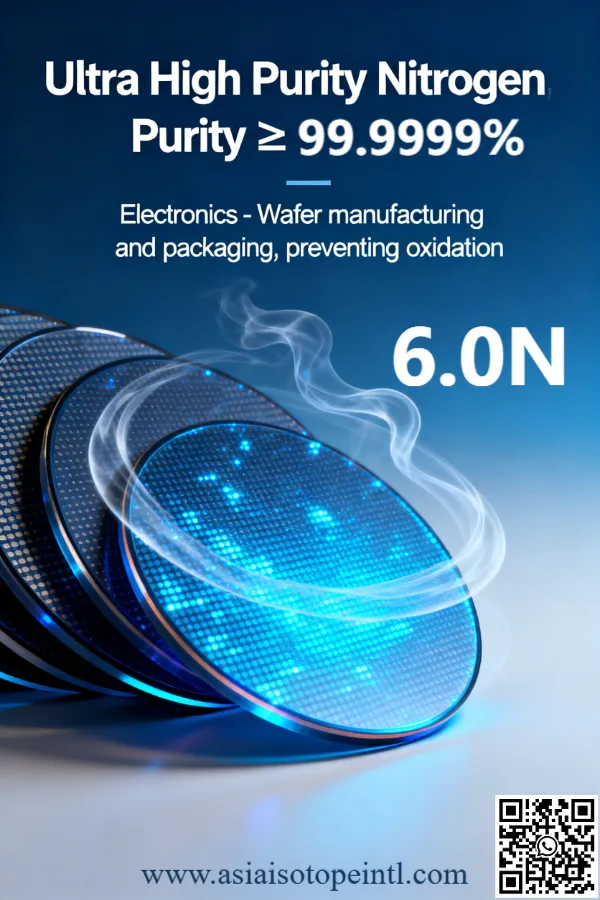
The semiconductor industry represents the most demanding application for UHP nitrogen, where contamination control directly impacts device yield and performance. In modern fabrication facilities, nitrogen consumption can exceed 100,000 cubic meters per hour, with multiple grades serving different applications.
Wafer Storage and Transport: FOUP (Front Opening Unified Pod) and SMIF (Standard Mechanical Interface) systems use nitrogen purging to maintain ultra-clean environments during wafer storage and transport between process tools. Studies show that continuous nitrogen purging can reduce oxidation rates by factors exceeding 1000 compared to clean dry air storage.
Load Lock and Transfer Chambers: These critical interfaces between atmospheric and vacuum environments rely on nitrogen purging to minimize contamination introduction. Advanced purge sequences, optimized through computational fluid dynamics modeling, can achieve atmosphere exchange efficiencies exceeding 99.999% in under 60 seconds.
Chemical Vapor Deposition: Many CVD processes use nitrogen as both a carrier gas and purge gas. The purity requirements are extreme—even 1 ppb of moisture can alter film properties in atomic layer deposition processes where individual molecular layers are deposited sequentially.
A compelling case study involves a major semiconductor manufacturer that experienced mysterious yield losses in their 7-nanometer process line. Investigation revealed that moisture contamination at levels below 100 ppb was causing interface defects in high-k metal gate structures. Implementation of an enhanced nitrogen purge system with inline moisture monitoring reduced defect density by 85% and improved overall yield by 12%.
Pharmaceutical and Biotechnology: Protecting Life-Saving Products
The pharmaceutical industry employs UHP nitrogen across numerous applications where product purity and stability are paramount. Unlike semiconductor manufacturing, where contamination primarily affects yield, pharmaceutical contamination can directly impact patient safety.
Lyophilization (Freeze-Drying): This critical process for preserving biological materials and creating stable drug formulations requires precise atmospheric control. Nitrogen backfilling after primary drying prevents oxidation and moisture reabsorption. Recent studies demonstrate that using UHP nitrogen with less than 1 ppm moisture can extend reconstituted vaccine stability from 6 hours to 48 hours at room temperature.
Aseptic Processing and Packaging: Nitrogen flushing in vial filling and sealing operations prevents oxidation of sensitive compounds. For biological products like monoclonal antibodies, oxygen levels above 2% can cause aggregation and loss of therapeutic efficacy. UHP nitrogen enables maintaining headspace oxygen below 0.5%, ensuring product stability throughout the intended shelf life.
API (Active Pharmaceutical Ingredient) Synthesis: Many pharmaceutical intermediates are sensitive to oxidation or hydrolysis. Nitrogen blanketing during synthesis, crystallization, and drying operations prevents degradation and ensures consistent product quality. One major pharmaceutical company reported reducing batch rejection rates from 3% to 0.2% after upgrading to UHP nitrogen for their API production.
Advanced Materials and Nanotechnology
The emergence of advanced materials with nanoscale features has created new challenges and opportunities for contamination control. Materials like graphene, carbon nanotubes, and quantum dots exhibit properties that can be dramatically altered by molecular-level contamination.
Graphene Production: The exceptional properties of graphene—including its electrical conductivity and mechanical strength—depend critically on structural perfection. Oxygen contamination during production can create defects that reduce conductivity by orders of magnitude. UHP nitrogen atmospheres during chemical vapor deposition and transfer processes are essential for maintaining graphene quality.
Battery Manufacturing: Next-generation lithium-ion batteries and solid-state batteries require exceptional contamination control during electrode preparation and cell assembly. Moisture levels above 20 ppm can cause lithium plating, capacity fade, and safety hazards. Leading battery manufacturers now specify nitrogen with less than 1 ppm moisture for critical assembly operations.
3D Printing of Metal Parts: Additive manufacturing of aerospace and medical components increasingly relies on inert atmosphere processing to prevent oxidation and ensure part quality. UHP nitrogen enables printing of reactive materials like titanium and aluminum alloys with minimal contamination, achieving mechanical properties comparable to traditional manufacturing methods.
Technological Innovations and Future Directions
Real-Time Contamination Monitoring
The evolution from reactive to proactive contamination control depends on our ability to detect and respond to contamination events in real-time. Recent advances in sensor technology enable continuous monitoring of multiple contaminants at sub-ppb levels.
Cavity Ring-Down Spectroscopy (CRDS): This optical technique can detect moisture, oxygen, and other contaminants at parts per trillion levels with response times under one second. Integration with process control systems enables automatic adjustment of purge rates and purification parameters.
Ion Mobility Spectrometry (IMS): Originally developed for chemical warfare agent detection, IMS technology now enables rapid identification of organic contaminants in nitrogen streams. The ability to detect and identify specific molecular species allows targeted response to contamination events.
Artificial Intelligence and Predictive Analytics: Machine learning algorithms can identify patterns in contamination data that predict impending system failures or process deviations. One semiconductor manufacturer reported 40% reduction in contamination-related downtime after implementing AI-driven predictive maintenance.
Next-Generation Purification Technologies
The quest for ever-higher purity levels drives continuous innovation in purification technology. Several promising approaches are emerging from research laboratories:
Metal-Organic Frameworks (MOFs): These crystalline materials feature tunable pore structures that can be designed for specific contaminant removal. Recent developments show MOFs achieving moisture removal to sub-ppb levels with lower energy consumption than traditional adsorbents.
Plasma-Based Purification: Non-thermal plasma systems can decompose organic contaminants without generating secondary pollutants. While energy-intensive, these systems offer advantages for removing contaminants that resist conventional purification methods.
Quantum Cascade Laser Purification: Though still experimental, selective photo-dissociation using quantum cascade lasers could enable removal of specific molecular contaminants without affecting the nitrogen carrier gas.
Integration with Industry 4.0
The digital transformation of manufacturing creates opportunities for enhanced contamination control through system integration and data analytics. Smart factories increasingly treat gas purity as a critical process parameter integrated into overall quality management systems.
Digital Twins: Virtual models of gas distribution systems enable optimization of purge sequences and prediction of contamination risks. By simulating various operational scenarios, manufacturers can identify and address vulnerabilities before they impact production.
Blockchain for Supply Chain Integrity: Ensuring gas purity from production through point-of-use requires verifiable chain-of-custody documentation. Blockchain technology provides immutable records of purity testing, handling, and distribution, essential for validated pharmaceutical processes and aerospace applications.
Economic Considerations and ROI Analysis
The True Cost of Contamination
While the initial investment in UHP nitrogen systems can be substantial, the economic justification becomes clear when considering the true cost of contamination. Beyond direct yield losses, contamination impacts include:
- Rework and Scrap: Contaminated products often cannot be salvaged, resulting in complete loss of materials and processing costs
- Equipment Downtime: Contamination events frequently require extensive cleaning and requalification procedures
- Reputation Damage: Quality issues can erode customer confidence and market share
- Regulatory Penalties: In regulated industries, contamination can trigger costly investigations and remediation requirements
A comprehensive study of semiconductor manufacturers found that every 1% improvement in contamination-related yield translated to $10-15 million in annual savings for a typical 300mm wafer fab. For pharmaceutical companies, preventing a single batch contamination event can save millions in direct costs and preserve invaluable customer trust.
Optimization Strategies
Maximizing return on investment requires holistic optimization of nitrogen usage:
Demand-Based Purity Management: Not all applications require the highest purity levels. Implementing tiered purity systems with appropriate grades for different applications can reduce costs without compromising quality.
Recovery and Recycling: Advanced membrane and adsorption systems can recover and purify nitrogen from process exhaust streams, reducing consumption by 30-50% in some applications.
Predictive Maintenance: Condition monitoring of purification equipment enables maintenance based on actual performance rather than fixed schedules, extending equipment life while ensuring consistent purity.
Conclusion: The Path to Zero-Defect Manufacturing
As we push the boundaries of manufacturing precision—whether producing 2-nanometer transistors, personalized cell therapies, or quantum computing components—our tolerance for contamination continues to shrink. Ultra high purity nitrogen stands as our most versatile and reliable tool in this ongoing battle against molecular contamination.
The journey toward zero-defect manufacturing requires more than just pure gases; it demands systematic approaches to contamination control, continuous innovation in purification and monitoring technologies, and deep understanding of contamination mechanisms at molecular scales. As manufacturing complexity increases and quality requirements tighten, the role of UHP nitrogen will only grow more critical.
Looking ahead, the convergence of advanced materials, artificial intelligence, and quantum technologies promises to revolutionize both manufacturing processes and contamination control strategies. The manufacturers who master molecular contamination control today will lead the industries of tomorrow. The investment in UHP nitrogen systems and expertise represents not just a cost of doing business, but a strategic capability that enables innovation and ensures competitiveness in increasingly demanding markets.
The pursuit of perfection in manufacturing may be asymptotic, but with ultra high purity nitrogen as our guardian against molecular contamination, we continue to approach that ideal. Each improvement in purity, each advancement in monitoring capability, and each refinement in application technique brings us closer to the ultimate goal of truly zero-defect manufacturing.
In my decades of experience in specialty gases and contamination control, I’ve witnessed remarkable transformations in manufacturing capabilities enabled by advances in gas purity. Yet I remain convinced that we’ve only scratched the surface of what’s possible. As we develop new materials and processes that operate at atomic and quantum scales, ultra high purity nitrogen will continue evolving to meet these challenges, remaining the invisible guardian that makes the impossible possible.
Would you like a deeper dive into any specific technical parameters or applications?
As an industry leader focused in Specialty Gases products, our goal is to support our customers by keeping them at the forefront of their industries. We’re here to help with any questions you might have so you can transform your ideas into reality, and tackle those big science challenges.
Get free consultant, our experts are ready to serve.
(Follow up our update articles on www.asiaisotopeintl.com or send your comments to tao.hu@asiaisotope.com for further communications)